This edition delves into contemporary issues‚ including predictive policing and reform movements‚ alongside foundational concepts like constitutional constraints and federalism.
Accessing the 10th Edition PDF offers comprehensive coverage of law enforcement‚ courts‚ and corrections‚ examining evolving technologies and their impact.
Overview of the Field
Criminal Justice in America encompasses the system’s intricate network of agencies and processes‚ from policing and judicial proceedings to correctional facilities and rehabilitation efforts.
The 10th Edition provides a holistic understanding‚ exploring historical foundations‚ constitutional limitations‚ and the evolving role of technology like digital forensics and predictive policing.
It examines crucial debates surrounding sentencing‚ punishment‚ and the very definition of “criminal” behavior‚ offering a nuanced perspective on this dynamic field.
Significance of the 10th Edition
This updated edition reflects contemporary challenges‚ including cybercrime and the potential for rehabilitation—even exploring models like Italy’s extinction of conviction process.
It’s crucial for students and professionals to grasp evolving legal interpretations‚ such as those concerning federal power and constitutional amendments‚ illustrated by cases like Rybar.
The 10th Edition offers a current‚ comprehensive resource for navigating the complexities of the American criminal justice landscape and its future trends.
Historical Foundations of American Criminal Justice
Early systems evolved from colonial roots‚ shaping modern policing and legal frameworks‚ while constitutional principles continually define justice boundaries.
Colonial Roots and Early Systems
American criminal justice initially mirrored British practices‚ emphasizing local control and varying punishments. Colonial laws addressed offenses like theft and social disorder‚ lacking standardized procedures. Early systems relied heavily on community involvement‚ with sheriffs and constables enforcing order. These foundations‚ though rudimentary‚ established precedents for due process and individual rights‚ influencing the development of modern legal structures and shaping the core principles of justice.
Development of Modern Policing
The 19th century witnessed the rise of professional police forces in American cities‚ shifting from watch systems to structured departments. Early policing faced challenges like political corruption and limited training‚ evolving through reforms focused on efficiency and accountability. Technological advancements‚ such as communication systems‚ aided crime control‚ laying the groundwork for contemporary law enforcement strategies and practices.
The Three Components of the Criminal Justice System
These interconnected parts – law enforcement‚ courts‚ and corrections – work to investigate crimes‚ determine guilt‚ and punish offenders‚ ensuring public safety.
Law Enforcement
This crucial component encompasses agencies at federal‚ state‚ and local levels‚ responsible for investigating crimes‚ apprehending suspects‚ and maintaining order within communities.
Modern policing evolved from colonial roots‚ facing challenges with digital evidence‚ cybercrime‚ and predictive policing technologies‚ demanding continuous adaptation and training.
Effective law enforcement relies on upholding constitutional rights during arrests and investigations‚ ensuring probable cause and adherence to legal procedures.
Courts
The judicial branch interprets laws and administers justice through a tiered system‚ from local courts to state supreme courts and the federal judiciary.
Judicial decision-making is influenced by appointments‚ ideology‚ and landmark cases like Rybar‚ impacting interpretations of federal power and constitutional rights.
Pre-trial motions and discovery processes are vital for ensuring fair trials‚ protecting defendant’s rights‚ and presenting evidence effectively before a jury.
Corrections
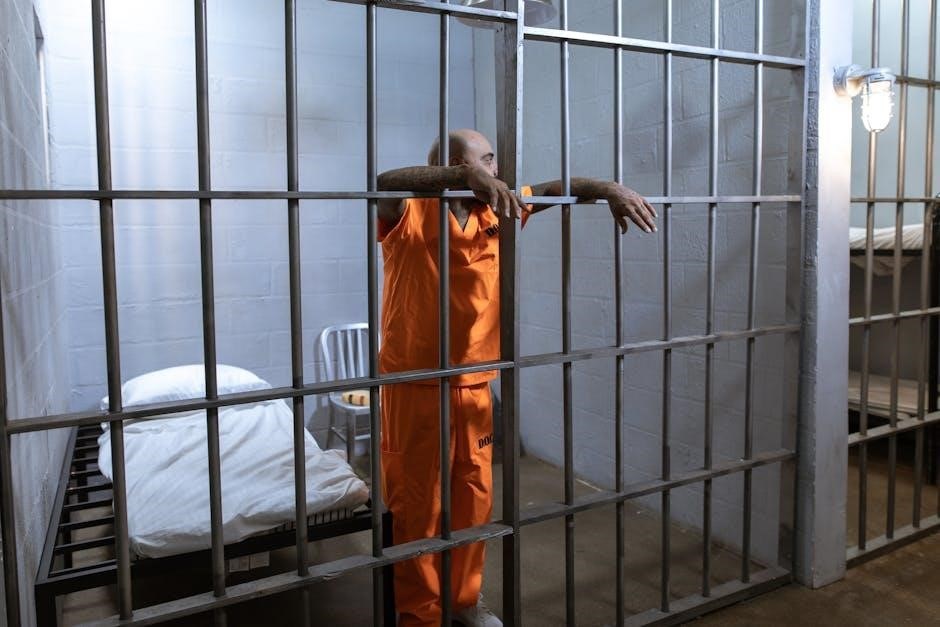
The corrections system encompasses prisons‚ parole‚ and reentry programs‚ aiming to punish offenders‚ protect society‚ and potentially rehabilitate individuals.
Prison conditions and the effectiveness of rehabilitation efforts are ongoing concerns‚ alongside the challenges faced by individuals reentering society post-incarceration.
Italian models‚ like rehabilitation leading to the extinction of conviction‚ offer alternative approaches to traditional punitive measures within the corrections landscape.
Constitutional Constraints on Criminal Justice
Amendments like the Fourth‚ Fifth‚ and Tenth safeguard individual rights throughout the criminal justice process‚ limiting governmental power and ensuring due process.
Fourth Amendment: Search and Seizure
The Fourth Amendment protects against unreasonable searches and seizures‚ requiring probable cause and often a warrant. This principle balances law enforcement needs with individual privacy rights‚ shaping arrest procedures and evidence admissibility.
Judicial interpretation continually refines these protections‚ impacting how evidence is gathered and used in court‚ ensuring constitutional boundaries are respected during investigations.
Fifth Amendment: Self-Incrimination and Due Process
The Fifth Amendment safeguards individuals from self-incrimination – the right to remain silent – and guarantees due process of law. This ensures fair legal proceedings‚ protecting against coerced confessions and arbitrary governmental actions.
These protections are fundamental to a just criminal justice system‚ influencing pre-trial motions‚ evidence presentation‚ and the overall fairness of legal proceedings.
Tenth Amendment and Federal Power
The Tenth Amendment reserves powers not delegated to the federal government‚ nor prohibited to the states‚ to the states respectively‚ or to the people. This impacts criminal law‚ defining the boundaries of federal jurisdiction.
Cases like Bond v. United States and interpretations of the Interstate Commerce Clause demonstrate ongoing debates about federal power limitations.
Federalism and Criminal Law
Federalism shapes criminal justice‚ dividing powers between state and federal governments‚ influencing jurisdiction and the application of laws across the nation.
Interstate Commerce Clause & Criminal Justice
The Interstate Commerce Clause significantly impacts federal criminal jurisdiction‚ allowing Congress to regulate activities affecting multiple states; however‚ its scope is debated.
Cases like Rybar demonstrate limitations‚ where a federal ban on machine gun possession failed to qualify as legitimate commerce regulation‚ highlighting constitutional boundaries.
This clause presents ongoing legal challenges‚ balancing federal power with state autonomy in addressing criminal behavior and ensuring consistent justice standards.
Federal vs. State Jurisdiction
Criminal justice operates across federal and state levels‚ creating a complex jurisdictional landscape; federal authority typically addresses crimes crossing state lines or violating federal law.
State jurisdiction primarily handles offenses within their borders‚ like most violent crimes and property offenses‚ reflecting principles of federalism and local control.
Overlapping authority can occur‚ necessitating careful consideration of constitutional limits and the scope of the Interstate Commerce Clause in defining legal boundaries.

Defining Crime and Criminal Behavior
Crime requires specific elements – actus reus and mens rea – differentiating felonies (serious offenses) from misdemeanors (lesser ones)‚ impacting legal definitions.
Elements of a Crime
Establishing guilt necessitates proving both actus reus – the criminal act itself – and mens rea‚ the guilty mind or intent. These core components define criminal liability‚ distinguishing accidental actions from purposeful offenses.
Without demonstrating both elements beyond a reasonable doubt‚ a conviction cannot stand‚ upholding due process and ensuring just outcomes within the legal framework.
Types of Crimes: Felonies vs. Misdemeanors
Felonies are generally grave offenses‚ punishable by imprisonment exceeding one year‚ or even death‚ impacting civil rights and future opportunities significantly. Misdemeanors‚ conversely‚ carry lighter penalties—typically fines or jail terms of less than a year.
This distinction dictates legal procedures and sentencing guidelines‚ reflecting the severity of the committed act and its societal impact.
The Role of Judges and Judicial Decision-Making
Judicial appointments and ideology profoundly shape legal outcomes‚ as demonstrated in cases like Rybar‚ impacting interpretations of federal power and commerce.
Judicial Appointments and Ideology
Candidates often pledge adherence to original constitutional meaning‚ yet may support federal laws expanding power—a potential ideological conflict. Appointments significantly influence rulings‚ impacting criminal justice.
Judge Alito’s decision in Rybar‚ following Lopez‚ exemplifies how judicial philosophy shapes interpretations of interstate commerce and federal authority regarding gun control.
Impact of Supreme Court Cases (e.g.‚ Rybar)
The Rybar case‚ mirroring Lopez‚ demonstrated limitations on federal power under the Commerce Clause‚ specifically regarding a ban on machine gun possession.
This precedent highlights how Supreme Court decisions constrain criminal justice legislation‚ influencing the balance between federal and state authority in defining and prosecuting crimes.
Criminal Procedure: From Arrest to Trial
This stage encompasses arrest procedures‚ probable cause‚ pre-trial motions‚ and discovery‚ outlining the legal processes safeguarding individual rights during investigation.
Arrest Procedures and Probable Cause
Legal standards dictate that arrests must be founded on probable cause‚ ensuring justification for infringing upon an individual’s liberty. This involves a reasonable belief‚ supported by facts‚ that a crime has been committed.
Proper procedures‚ including Miranda rights‚ are crucial to protect due process‚ preventing coerced confessions and upholding constitutional protections throughout the investigative process.
Pre-Trial Motions and Discovery
Crucially‚ pre-trial motions allow defendants to challenge evidence or procedures‚ seeking suppression of illegally obtained items or dismissal of charges based on legal deficiencies.
Discovery processes enable both sides to exchange information‚ fostering transparency and ensuring a fair trial by revealing evidence held by the prosecution and defense teams.

The Trial Process
The trial involves meticulous jury selection‚ presentation of evidence‚ and adherence to legal procedures‚ ensuring due process and a fair determination of guilt or innocence.
Jury Selection
Jury selection‚ or voir dire‚ is a critical stage where potential jurors are questioned to ensure impartiality. This process aims to eliminate biases and secure a panel capable of rendering a just verdict based solely on presented evidence.
Attorneys utilize challenges for cause and peremptory challenges to shape the jury‚ striving for a composition favorable to their client’s case‚ upholding fairness within the system.
Presentation of Evidence
The presentation of evidence involves introducing facts – testimonies‚ documents‚ and physical items – to support a case’s narrative. Rules of evidence govern admissibility‚ ensuring reliability and relevance to avoid misleading the jury.
Direct and circumstantial evidence are presented‚ with cross-examination challenging witness credibility and scrutinizing the validity of submitted materials‚ forming the core of the trial.
Sentencing and Punishment
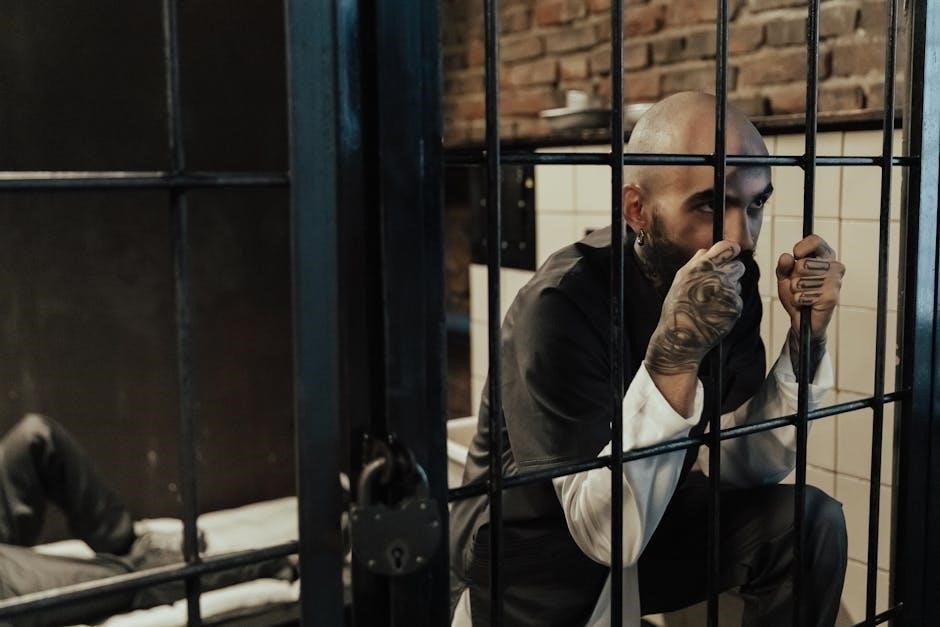
Sentencing guidelines and alternatives to incarceration‚ like parole and rehabilitation programs‚ are explored‚ impacting the duration and form of punishment imposed.
Sentencing Guidelines
Structured sentencing aims for consistency and proportionality‚ utilizing grids based on offense severity and criminal history; however‚ judicial discretion remains crucial.
These guidelines‚ while intending to reduce disparity‚ face criticism for potentially increasing incarceration rates and limiting individualized justice considerations;
The 10th edition examines the evolution and impact of these guidelines‚ alongside evolving perspectives on restorative justice and alternatives to traditional punishment.
Alternatives to Incarceration
Probation‚ parole‚ and community service offer avenues for rehabilitation outside prison walls‚ addressing overcrowding and reducing correctional costs.
Restorative justice programs‚ focusing on victim-offender reconciliation‚ gain prominence‚ alongside drug courts and mental health courts.
The 10th edition explores the effectiveness and challenges of these alternatives‚ considering their impact on recidivism and public safety outcomes.

Corrections in the United States
This section examines prison systems‚ conditions‚ and the challenges of parole and reentry‚ crucial for successful rehabilitation and reducing recidivism rates.
Prison Systems and Conditions
Exploring the diverse landscape of U.S. correctional facilities‚ this analysis details varying security levels—from minimum to maximum—and their associated living conditions.
It investigates overcrowding‚ healthcare access‚ and inmate rights‚ alongside the impact of these factors on rehabilitation efforts and overall prison safety.
Furthermore‚ it considers the role of private prisons and their influence on correctional policies and practices within the American criminal justice system.
Parole and Reentry
This section examines the complexities of parole‚ detailing conditions‚ supervision levels‚ and revocation procedures impacting formerly incarcerated individuals’ freedom.
It analyzes the significant challenges faced during reentry—housing‚ employment‚ and social reintegration—and the role of support services in successful transitions.
Moreover‚ it explores the impact of collateral consequences‚ like disenfranchisement‚ on long-term rehabilitation and societal reintegration post-release.
Contemporary Issues in Criminal Justice
Current debates encompass rehabilitation approaches—like the Italian model—and the evolving legal definition of “criminal‚” impacting convictions and societal perceptions.
Rehabilitation and Extinction of Conviction (Italian Model)
The Italian system offers a pathway for convicted individuals‚ like Flavio Briatore‚ to extinguish criminal effects through demonstrated rehabilitation; a concept largely absent in US corrections.
This contrasts with American sentencing‚ often prioritizing punishment over reintegration‚ despite growing calls for reform and exploring alternative models focused on restorative justice principles.
The Definition of “Criminal” and its Legal Implications
Defining “criminal” is fundamental‚ encompassing acts violating laws and carrying penalties; Oxford defines it as relating to crime‚ impacting legal proceedings and individual rights.
This definition shapes due process‚ sentencing‚ and societal perceptions‚ influencing everything from arrest procedures to the long-term consequences of a criminal record.
Technology and Criminal Justice
Digital evidence and forensics are increasingly vital‚ alongside addressing cybercrime’s growing threat; technology reshapes investigations and legal procedures significantly.
Digital Evidence and Forensics
The rise of digital evidence necessitates specialized forensic techniques to analyze data from computers‚ phones‚ and networks‚ crucial for modern investigations.
Examining confidential records‚ like those from Starwood Hotels or the Boston Red Sox‚ exemplifies the scope; proper handling ensures admissibility in court.
Forensic analysis uncovers vital clues‚ impacting cases from minor offenses to complex cybercrimes‚ demanding skilled professionals and evolving methodologies.
Cybercrime
Cybercrime presents unique challenges‚ ranging from data breaches affecting organizations like Starwood Hotels to sophisticated attacks targeting critical infrastructure.
Investigating these offenses requires specialized knowledge of digital forensics and an understanding of evolving cyber threats and criminal methodologies.
The legal framework struggles to keep pace with technological advancements‚ demanding continuous adaptation and international cooperation to combat this growing problem.

Future Trends in Criminal Justice
Emerging trends like predictive policing and ongoing criminal justice reform movements are reshaping the field‚ demanding innovative strategies and ethical considerations.
Predictive Policing
Predictive policing utilizes analytical techniques to anticipate crime‚ deploying resources proactively based on statistical probabilities and patterns. This approach‚ however‚ raises concerns regarding potential biases embedded within algorithms and data sets.
Ethical considerations surrounding privacy‚ fairness‚ and the potential for reinforcing existing inequalities are crucial as law enforcement increasingly adopts these technologies‚ demanding careful oversight.
Criminal Justice Reform Movements
Contemporary movements advocate for systemic changes‚ addressing issues like mass incarceration‚ racial disparities‚ and excessive sentencing. These efforts encompass bail reform‚ alternatives to incarceration‚ and rehabilitation programs‚ mirroring the Italian model’s extinction of conviction.
Focus areas include reducing recidivism‚ promoting restorative justice‚ and re-evaluating the definition of “criminal” to foster a more equitable and effective system for all citizens;
Resources and Further Study
Explore relevant websites like Volokh.com for legal insights and access organizations dedicated to criminal justice reform and scholarly research.
Accessing the 10th Edition PDF
Locating a free PDF of “Criminal Justice in America (10th Edition)” may prove challenging due to copyright restrictions; legitimate access typically requires purchase.
However‚ educational institutions often provide students with digital copies through learning management systems or library resources‚ ensuring authorized access.
Beware of unofficial sources offering downloads‚ as these may contain malware or violate intellectual property laws‚ compromising your security.
Relevant Websites and Organizations
Volokh Conspiracy provides insightful legal analysis‚ including discussions on constitutional law and federal power relevant to criminal justice‚ offering valuable context.
NPR’s coverage‚ like the segment on Rybar‚ illuminates Supreme Court cases impacting criminal procedure and commerce clause interpretations.
Oxford Learners Dictionaries offer precise definitions of key terms like “criminal‚” aiding comprehension of legal concepts within the field.